


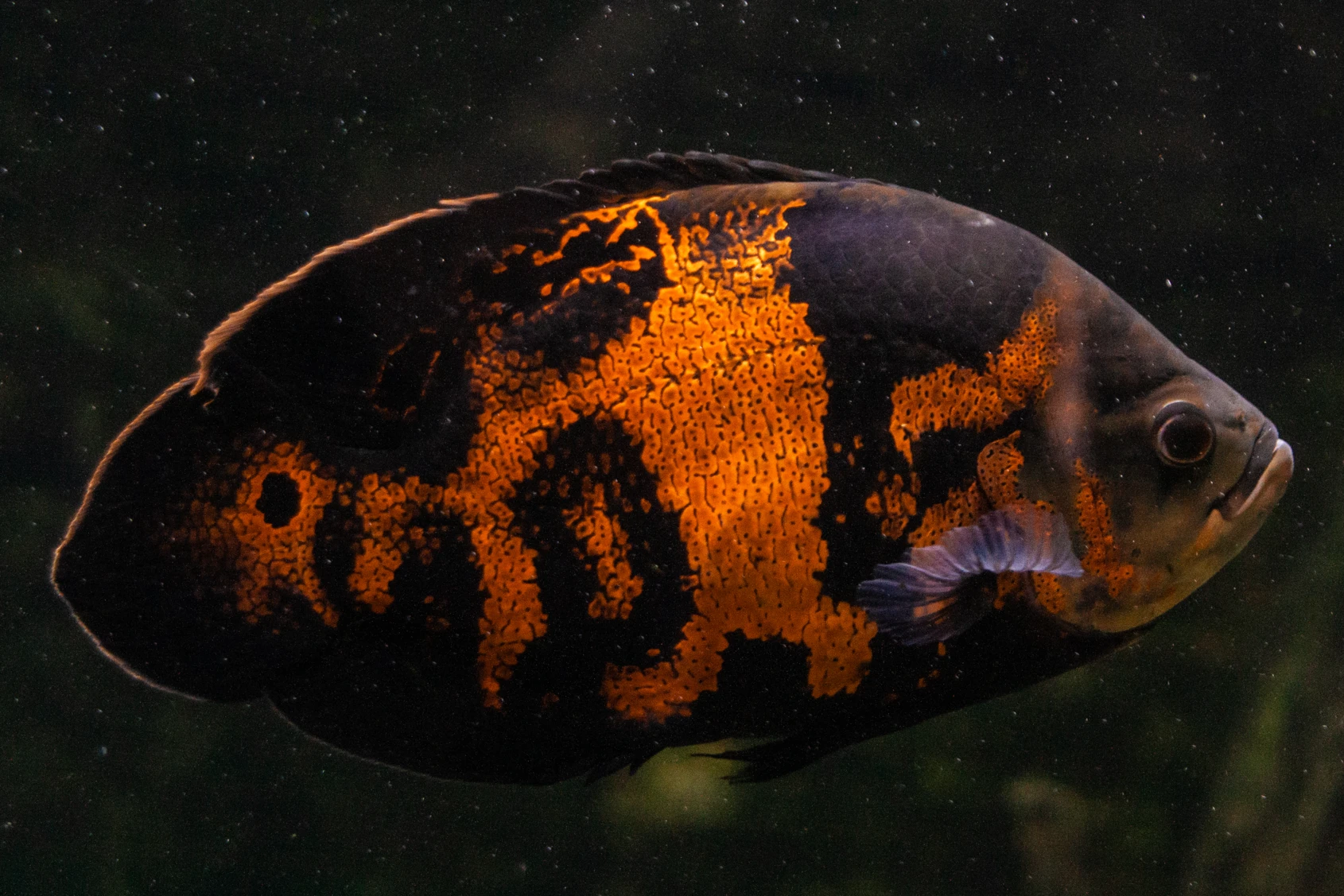
The Oscar fish, scientifically known as Astronotus ocellatus, is a striking and captivating member of the cichlid family. Known by various common names, including the Tiger Oscar, Velvet Cichlid, and Marble Cichlid, this fish has earned its place as a favorite among both novice and experienced aquarists. Whether you’re a new fish keeper or a seasoned hobbyist, this guide will provide you with essential information on caring for Oscar fish, their characteristics, and everything you need to know to ensure a thriving aquatic environment for these magnificent creatures.
Understanding the Oscar Fish
Appearance and Varieties
Oscar fish are renowned for their vibrant colours and dynamic patterns. Depending on their variety, you might encounter:
-
Tiger Oscar:
-
Appearance: Features a striking orange or red base colour with black vertical stripes, resembling a tiger’s pattern.
-
Size: Can grow up to 45 cm (18 inches) in length.
-
Behavior: Known for its aggressive and territorial nature, especially during breeding.
-
-
Red Oscar :
-
Appearance: Characterized by a bright red or orange body with darker markings or spots.
-
Size: Similar to the Tiger Oscar, reaching up to 45 cm (18 inches).
-
Behaviour: Generally has a strong personality and can be quite interactive with its owner.
-
-
Albino Oscar:
-
Appearance: Typically white or pale yellow with red or orange eyes, lacking the normal pigmentation.
-
Size: Also reaches about 45 cm (18 inches).
-
Behaviour: Behaviour is similar to other Oscars, with a tendency towards aggression and territorialism.
-
-
Lemon Oscar:
-
Appearance: Exhibits a pale yellow or lemon-colored body with varying darker markings.
-
Size: Can grow up to 45 cm (18 inches) in length.
-
Behaviour: Shares typical Oscar behaviours, including a strong territorial instinct and a high level of intelligence.
-
-
Black Oscar:
-
Appearance: Predominantly black with potential white or silver speckles or markings.
-
Size: Similar size to other Oscars, around 45 cm (18 inches).
-
Behaviour: Known for their bold personalities and can be quite aggressive towards other fish.
-
-
Albino Tiger Oscar:
-
Appearance: Combines the albino colour pattern with the tiger stripe pattern, often with a pale yellow or pinkish base colour and darker stripes.
-
Size: Grows up to 45 cm (18 inches).
-
Behaviour: Displays the typical aggressive and territorial behaviour seen in other Oscars.
-
They can grow quite large, typically reaching lengths of 30 to 45 cm (12 - 18 inches) in captivity, and sometimes even up to 50 cm (20 inches). Their lifespan can extend up to 20 years with proper care.
Natural Habitat
In the wild, Oscars are native to the slow-moving rivers and streams of South America, particularly the Amazon Basin. They thrive in warm, acidic waters with plenty of hiding spots and a varied diet.
Care Guide for Oscar Fish
Tank Setup
-
Tank Size: Due to their size, Oscars require a spacious tank. A minimum of 280 liters (75 gallons) is recommended for one Oscar, with larger tanks being preferable for multiple fish or a more comfortable environment.
-
Water Conditions:
-
Temperature: Maintain a water temperature between 23°C to 26°C (74°F and 78°F).
-
pH Level: Oscars prefer slightly acidic to neutral water, with a pH range of 6.0 to 7.5.
-
Filtration: A robust filtration system is essential to manage the waste produced by these large fish. Opt for a high-quality external filter and consider adding a powerhead to improve water circulation.
-
-
Substrate and Decor:
-
Substrate: Use a fine gravel or sand substrate to avoid injury to the fish. Oscars enjoy digging and sifting through the substrate.
-
Decor: Provide plenty of hiding spots using rocks, driftwood, and plants. Ensure decorations are securely placed to prevent accidents.
-
Feeding and Diet
Oscars are omnivorous and have a hearty appetite. Their diet should consist of:
-
Pellets: High-quality cichlid pellets should be a staple.
-
Live or Frozen Foods: Supplement with live or frozen foods like worms, shrimp, and small fish.
-
Vegetables: Occasionally offer vegetables such as peas or spinach.
Feed Oscars once or twice a day, providing only what they can consume in a few minutes to avoid overfeeding and water quality issues.
Behaviour and Tank Mates
Oscars are known for their intelligent and interactive behaviour. They can recognize their owners and may/most likely even interact with them. However, they can also be territorial and aggressive, especially as they mature.
-
Tank Mates: Choose tank mates carefully. Good companions include other large, robust fish that can handle the Oscar’s aggressive tendencies, such as:
-
Common Plecos
-
Large Catfish
-
Certain Cichlid Species
-
Avoid small or delicate fish, as Oscars may view them as prey.
Health and Maintenance
-
Regular Maintenance:
-
Water Changes: Perform weekly water changes of 20-30% to maintain water quality.
-
Tank Cleaning: Clean the tank and equipment regularly to prevent algae and waste buildup.
-
-
Health Monitoring:
-
Behaviour: Watch for signs of stress or illness, such as loss of appetite, unusual swimming patterns, or visible sores.
-
Disease: Be aware of common fish diseases like ich, HITH (hole in the head) or fin rot. Consult with a veterinarian specializing in aquatic animals if you notice any health issues.
-
Additional Tips
-
Socialization: Spend time observing and interacting with your Oscars to build trust and keep them mentally stimulated.
-
Education: Continue learning about cichlid care and stay updated on best practices for maintaining a healthy aquarium environment.
By providing the right environment, diet, and care, you can enjoy the beauty and personality of Oscar fish for many years. Their striking appearance and engaging behaviour make them a rewarding addition to any aquarium. Whether you’re just starting or have years of experience, understanding and meeting the needs of your Oscar fish will ensure a successful and enjoyable fishkeeping experience.